Vendion
    All articles
    Market Trends2026-04-16Vendion-teamet

    Dark Kitchens and Ghost Kitchens in Sweden: How to Maximize Profitability in 2026

    Dark Kitchens and Ghost Kitchens in Sweden: How to Maximize Profitability in 2026

    What are the technical and operational requirements to start and run a successful dark kitchen in Sweden?

    A successful dark kitchen requires strict control over margins, 100% uptime, and an order flow that consolidates all delivery platforms onto a single screen. By eliminating tablet chaos and utilizing AI-driven data analytics, you can cut prep times in half, drastically reduce error rates, and increase profitability per square meter.

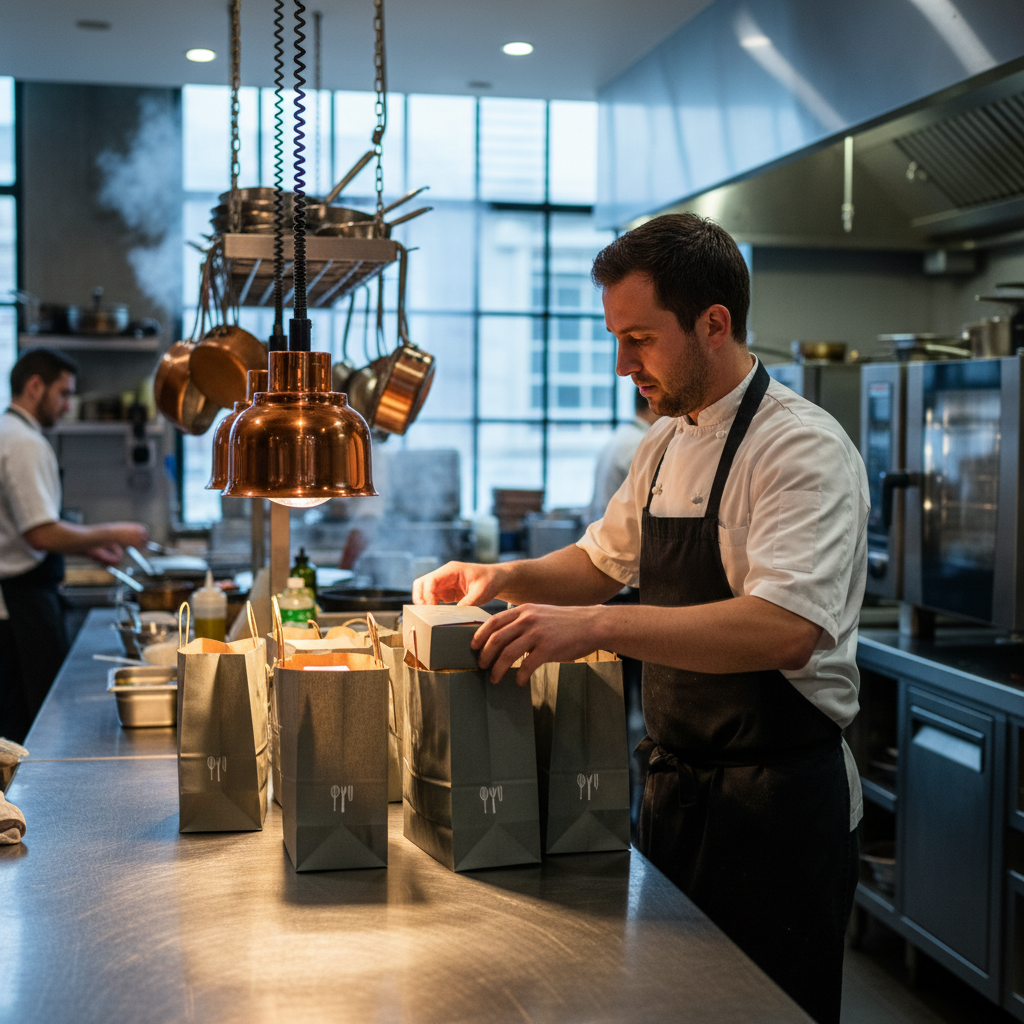
    Dark kitchens, ghost kitchens, virtual restaurants, or cloud kitchens—success has many names. What began as a pure survival strategy for many restaurateurs during global lockdowns has, by 2026, matured into one of the highest-performing and most exciting business models in the Swedish hospitality industry. Without a traditional dining room, costs for interior design, premium real estate, and waitstaff disappear. What remains is a pure production facility where efficiency, speed, and data are the only currencies that matter.

    But running a ghost kitchen isn't just about closing the dining room doors and turning on the delivery apps. It requires an entirely different level of operational precision. When the guest experience is entirely determined by how the food tastes after 20 minutes on a bicycle, and when your only marketing channel is an algorithm, your technical infrastructure must be flawless. Here is how you navigate the dark kitchen market and build a tech stack that actually scales.

    What Exactly is a Dark Kitchen in 2026?

    The industry has evolved rapidly. Today, we primarily talk about three different models for virtual restaurants on the Swedish market:

    1. The pure dark kitchen concept: A dedicated facility (often in industrial areas or basement locations with cheap rent) that cooks food exclusively for home delivery. No guests, no outward-facing signs.
    2. Host kitchens: An existing restaurant that during select hours—or from a separate part of the kitchen—cooks food under a completely different brand for delivery. For example, a breakfast café might transform into a virtual smash burger concept in the evenings.
    3. Multi-brand virtual food halls: A single large central kitchen that operates five, ten, or even fifteen different virtual brands (e.g., a sushi bar, a taco joint, and a vegan salad bar) from the exact same production line.

    Regardless of which model you choose, the challenge is the same: You must handle massive volumes of orders from multiple channels (Wolt, Uber Eats, Foodora, your own website) without losing control of the kitchen.

    Eliminate Tablet Chaos with a Unified Order Flow

    The absolute biggest bottleneck for a newly started dark kitchen is the infamous "tablet chaos." You've probably seen it: a wall covered with five different tablets from various delivery platforms, all pinging simultaneously with different sounds. The staff has to run between the tablets, manually enter the orders into the POS for accounting purposes, and then shout the orders to the kitchen or write paper tickets.

    This is operational suicide. Manual transfers inevitably lead to errors. Data shows that restaurants manually entering delivery orders have an error margin of up to 8 percent during peak hours. Every missed onion allergy or forgotten dip sauce results in a bad review, which immediately penalizes you in the delivery apps' algorithms.

    The solution is Vendion's Order module, which forms the very foundation of the platform. Instead of standalone integrations, all orders—whether they come from Wolt, your own online ordering, or an express kiosk—flow directly into the same system. No manual entry. No stress over missed tickets. It is a unified order flow that allows your staff to focus on cooking instead of playing administrator.

    KDS: The Heart of Your Delivery Operation

    In a dark kitchen, there is no waitstaff who can mitigate delays with a smile and some extra bread at the table. Speed and precision are everything. Therefore, paper tickets are completely out of the question. You need a Kitchen Display System (KDS).

    When an order comes in via API from a delivery platform, it appears on the KDS screen in the kitchen in milliseconds. The system automatically sorts the dishes based on prep time. The chef sees exactly what needs to be prepared, how many minutes remain until the courier arrives, and can check off dishes with a quick tap on the screen. Restaurateurs who switch from paper tickets to Vendion's KDS in a ghost kitchen scenario often reduce their idle times and ticket times by up to 30 percent. Faster food out means hotter food to the customer, which means higher ratings—and ultimately, more sales.

    A/B Test Your Concepts in Real-Time with AI

    One of the absolute biggest advantages of a ghost kitchen is flexibility. Since you haven't invested millions in physical signage and interior design, you can test new concepts overnight. If your new venture into Korean fried chicken isn't selling? Scrap it and launch a Neapolitan pizza concept the next day.

    But to know what works, you need data. Vendion 360, where all modules work together, gives you access to powerful AI-driven analytics. The AI assistant doesn't just analyze what sells, but when it sells and how it affects your food costs. You can see exactly which of your four virtual brands generates the highest profit margin per hour worked. It's not about guessing; it's about letting the data dictate the menu.

    Furthermore, you can manage all your virtual brands from a single backend. You don't need to log in and out of different accounts. Everything lives in the same system, making inventory and food cost calculations ridiculously simple, even when running six different restaurant concepts from the same walk-in cooler.

    Scale Unhindered and Stop Paying for Hardware You Don't Own

    Scaling a dark kitchen concept should be fast. If you find a winning brand, you want to be able to open three new kitchens in three new cities next month. The traditional POS industry, with its outdated dinosaur systems, often tries to lock you into expensive hardware leasing contracts of 36 or 60 months per new unit.

    With Vendion, it's different. Our software runs in the cloud, directly in the browser, or on any modern hardware of your choice. You decide. And because there is no lock-in period, you can scale up—or down—at the exact pace your business plan requires. You only pay for the modules you actually use, but always get access to the latest technology.

    A dark kitchen is fundamentally a tech company that happens to sell food. To win in this extremely competitive niche, your platform must be as fast and adaptable as you are. By building your operation on a modern, AI-driven foundation, you ensure that your kitchen can deliver maximum profitability, regardless of how many brands you choose to launch.

    Ready to try Vendion?

    Book a demo. 30 minutes. We'll show you the system live.

    Book a demo